“Open your mind, get up off the couch, move.”
Our plans fell apart in Transylvania. My wife had built a calm, well-paced itinerary with ChatGPT, but after we passed billboard after billboard for Dino Parc Râșnov, we all agreed it looked cheesy. So I pasted the itinerary into Claude with a “Time Out editor” command I wrote and asked it to fill the gap and edit anything else it saw fit. It came back with a far richer plan that has had me spinning all week. The command is at the bottom of this post. Here is why it shocked me. The short version: understand a place enough to be moved by it, then trust a guide with taste and go.
The guide I couldn't clone
I am obsessed with finding the places and events that leave a mark on you for the rest of your life, and I want that for everyone. I believe more real-life encounters (on the bus, at a market, at a bar) spark better ideas and a better world, so Adam Wilson and I built Hugecity, an app that put every event happening around you on a map. We sold it to Time Out, the iconic global city-guide publisher, where I met phenomenal people like Ray Jones, then the global bar editor.
Ray kept a wild list called “Bars I want my kids to spread my ashes”: Clermont Lounge in Atlanta, Marie's Crisis in New York, Broken Shaker in Miami. Completely unique places that sear their sights, sounds, smells, and tastes into you forever.
I used to think you needed a guide like Ray, and that nothing would ever beat shutting up and following him into some alley with a secret door. Without one, I was terrified of missing things, so before every trip I did a mountain of research: Time Out, Michelin, and Lonely Planet guides, custom Google Maps, YouTube, Instagram. Inevitably, the week after I got home an ad would show me what I missed, and I would amend my guide for the next time. The most pushed information online is usually the most boring and the least authentic, and sorting the real from the manufactured ate days of every trip.
An AI Ray Jones in every city
Now I can have a Ray Jones for every kind of thing a city guide covers, everywhere I go: bars, food, kids, day trips. What I spent years building at Hugecity, helping you find what is worth doing around you, now fits in a prompt. It also replaces the habit I keep even when I am most tired: making lists and plans so I never miss out. Unlike Hugecity, I am not building a business around it. I am just using it, and it is going to enrich the lives of my family and anyone else who travels the way we do.
Here is what that looked like. My wife's ChatGPT plan even protected a chill day, but it was the greatest hits: a water park, Bran Castle, a dinosaur park, Peleș, a salt mine. We had already done the water park and Bran Castle when I asked Claude for a rewrite. The rewrite kept some of the list and swapped the dinosaur park and the chill day for places with a story.
On Tuesday we visited Libearty, a sanctuary for rescued brown bears, then Prejmer, a village church turned fortress with 272 cells built into its walls where families lived out sieges. Our kids loved the tunnels, and lunch was across the road at Hanul Bucuriei.
Thursday became Viscri, a Saxon village of whitewashed houses. Claude's note on lunch there at Viscri 32, a restored barn, was: “Book the long table; ask what the village has made that week.” That is the kind of line I used to get only from Time Out editors like Ray. The hand-off version Claude wrote afterward, with what we would keep, change, and skip, is here.
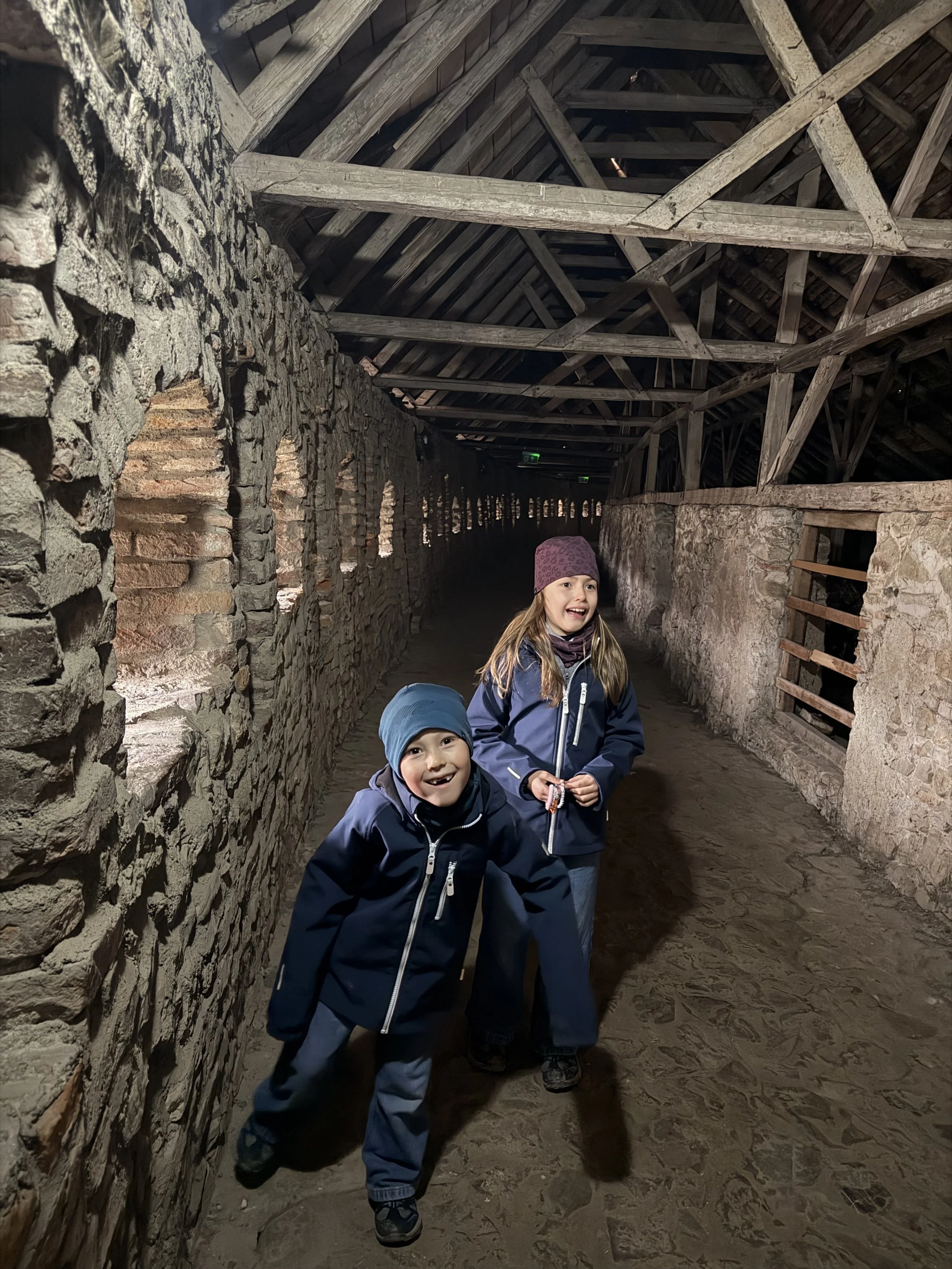
Kids in the Prejmer tunnels
The kids' favorites were Sighișoara, the walled city where Vlad was born, the old hotel we stayed in inside its walls, and the “ice cave” in the salt mine. They were also the most adventurous eaters we have ever seen, especially with the chicken schnitzel.
Romania, which I had wrong
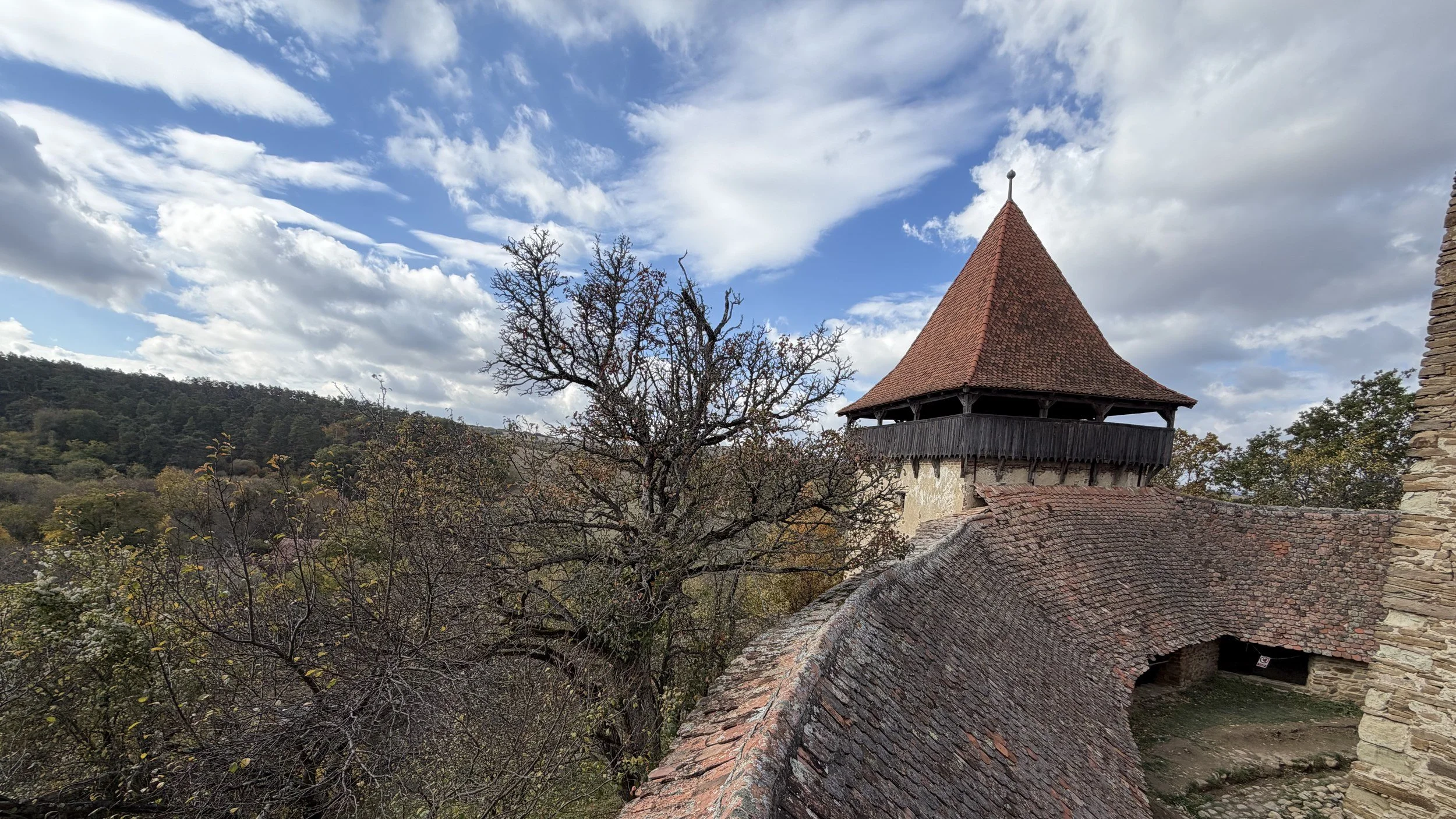
I knew next to nothing about Romania before we went. I expected somewhere still catching up economically. Instead it felt far more European than I imagined, and proudly part of the EU. Everything worked, and everything was being built, upgraded, or renovated, all for the better. The landscape was a fairy tale of fortified churches rising over gentle hills and villages that have kept their old charm. A trail sign on the Rupea–Viscri hike, from the Transylvanian Highlands ecotourism project, calls the hills “Europe's last truly medieval landscape,” and I understood why.
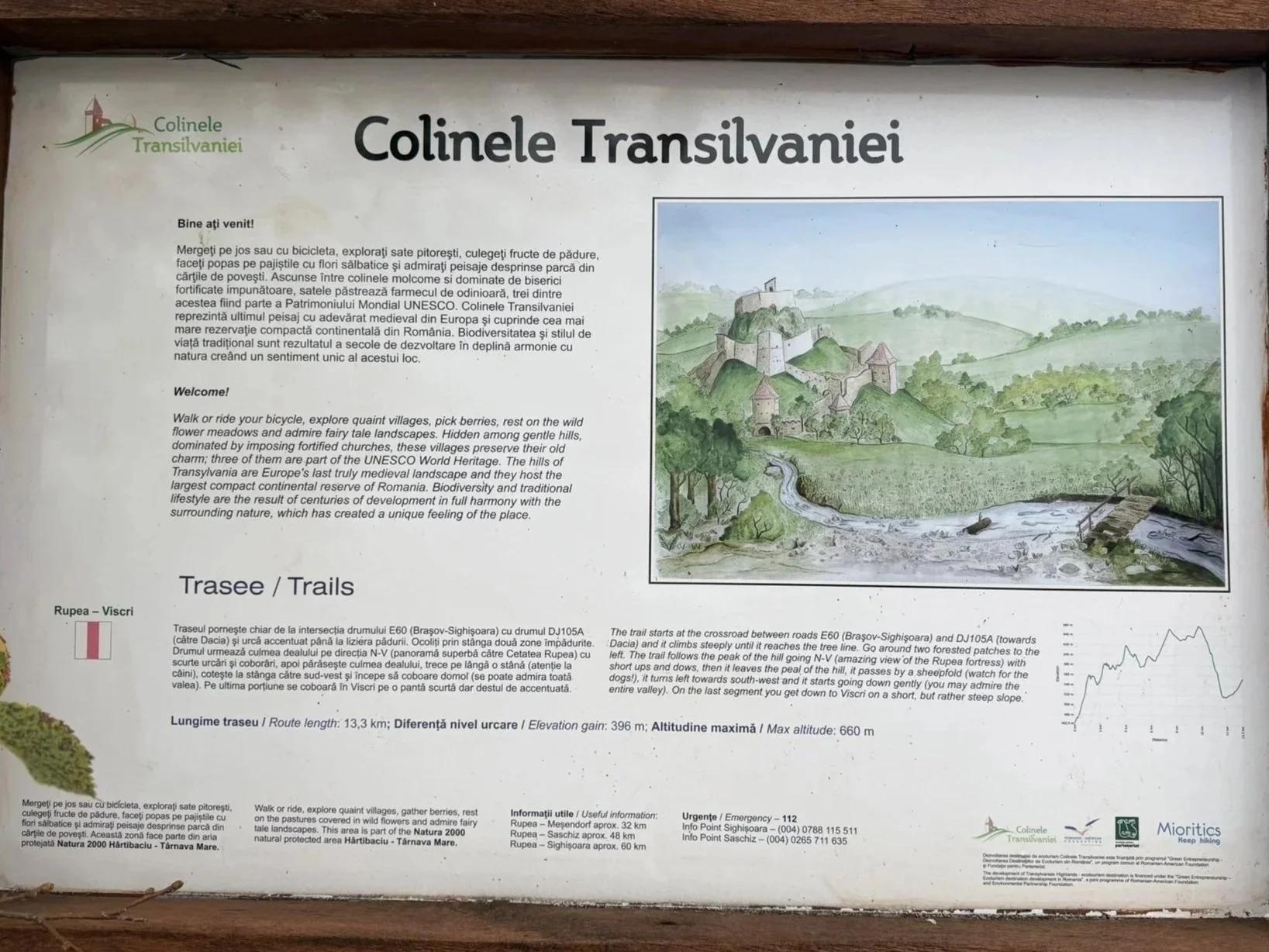
The sign on the Rupea–Viscri trail.
It reminded me of traveling with my family as a kid, and of backpacking around Western Europe in college. Travel has gotten so much better since then: cheap 5G, Google Maps, credit cards accepted almost everywhere with no international fees, Google Translate, and now Claude, which does the planning that used to eat my days. It was easy to explore, the people were friendly, and my assumptions were completely wrong. It made me want to visit every Eastern European country I have not been to.
What changed
AI used to be just OK at this. Over the past six months everything has changed, and now it is great. It can search the live web and plan around the weather and any news that matters. Each evening we gave it feedback, so the next day's picks got better. It still isn't perfect, which I like, because the serendipity survives. Something is unexpectedly closed, or my six-year-old decides a place smells of smoke, and I tell Claude where we are and where our hotel is and ask it to find the best unique ice cream place on our way home right now. I still book as the human. The plan bends instead of breaking.
You also can't do everything in one trip, however hard you chase. Some of Claude's best work was subtraction: its hand-off list of what to skip, written with hindsight, included the water park we had already done, the dinosaur park, and a Sinaia lunch at a chain in a strip mall.
What makes it work
The prompt matters more than I expected. AI planners default to the same popular places: one study of 420 recommendations from ten AI systems found they converged on a narrow set of iconic spots. “Ex-Time Out editor,” “artisan over manufactured,” and “atmosphere over all” give Claude a point of view instead of a popularity contest. “Time Out editor” only names a well-branded perspective, and Time Out is broad; those three phrases sharpen it, and you could sharpen it further for your own taste. That may be why the Dino Parc rescue worked: the point of view, more than the model.
That echoes the lesson from Hugecity: an algorithm combined with local tastemakers beat the algorithm alone. Ray's list is the tastemaker layer, and next I want to feed Claude lists like his so it learns what “legendary” means to me.
I almost never had to check its work. Nearly every stop was a home run, and the misses were few and cheap: a subpar dinner in Sighișoara and a Brașov restaurant too full of tourists. The one real miss was mine: Jidvei's wine tasting needed 24 hours' notice and I didn't book. Audits of AI restaurant recommendations find that the common failure is permanently closed venues, so my command makes Claude cite a source for every stop and say how fresh it is, and it warned us before we arrived that the church interior in Viscri had been closed since September. The horror stories about invented museums describe tools guessing from memory. This one looked things up.
Letting go
I recently heard Radiolab's “Math Vs Machine,” where mathematician Steve Strogatz wrestles with AI solving problems that baffle the world's best mathematicians. He says he is terrified, because the answers are arriving without anyone understanding how, and I felt a smaller version of that. I have spent 16 years on one problem, helping people discover what is happening around them, and I always assumed the solution would be an app. It is not solved, but it has advanced beyond what I thought the solution should be: a paragraph of instructions.
One line from the episode stuck with me. It comes from MIT researcher Regina Barzilay, whose machine-learning system spots breast-cancer risks that radiologists can't readily see:
“Why would we limit the machine to what humans can understand?”
I am not that brave with a dinner reservation. I still book the tables. But I no longer need to check or understand every pick before I follow it, so now I follow Claude down dark alleys, with my kids. The stakes are far lower than Barzilay's: a dinner, not a diagnosis.
There is a catch. My command only finds what I ask for. Barzilay's system found risks that radiologists could not see. The next step is leaving room for what I would never have thought to ask. The best moments of this trip were the ones no prompt asked for, and that is what the Cunningham's Law ask below is for: I post my slightly wrong answer, and you tell me what I am missing.
A fair worry is that a command like this sends everyone to the same quiet places. I think it helps people find what they are actually after. My family does not like to sit around, so we got more of that, and someone who wants beautiful artist communities will get those. Viscri was gorgeous and still felt undiscovered.
Some of the best memories are the things that went wrong. We missed the Jidvei tasting because I hadn't booked, though the castle, which I was told was a champagne house in the communist era, handed us a glass of champagne anyway. With no lunch to be had there, we ended up at Art Club in Târnăveni for a lunch no plan would have included, and it was very nice. Language was no problem: we mimed enough to get through, people filled our tires with air, and two restaurants, Hanul Bucuriei and Restaurant Muntenesc, gave us a free round of dessert. None of that was in any itinerary, and it is the part I will remember.
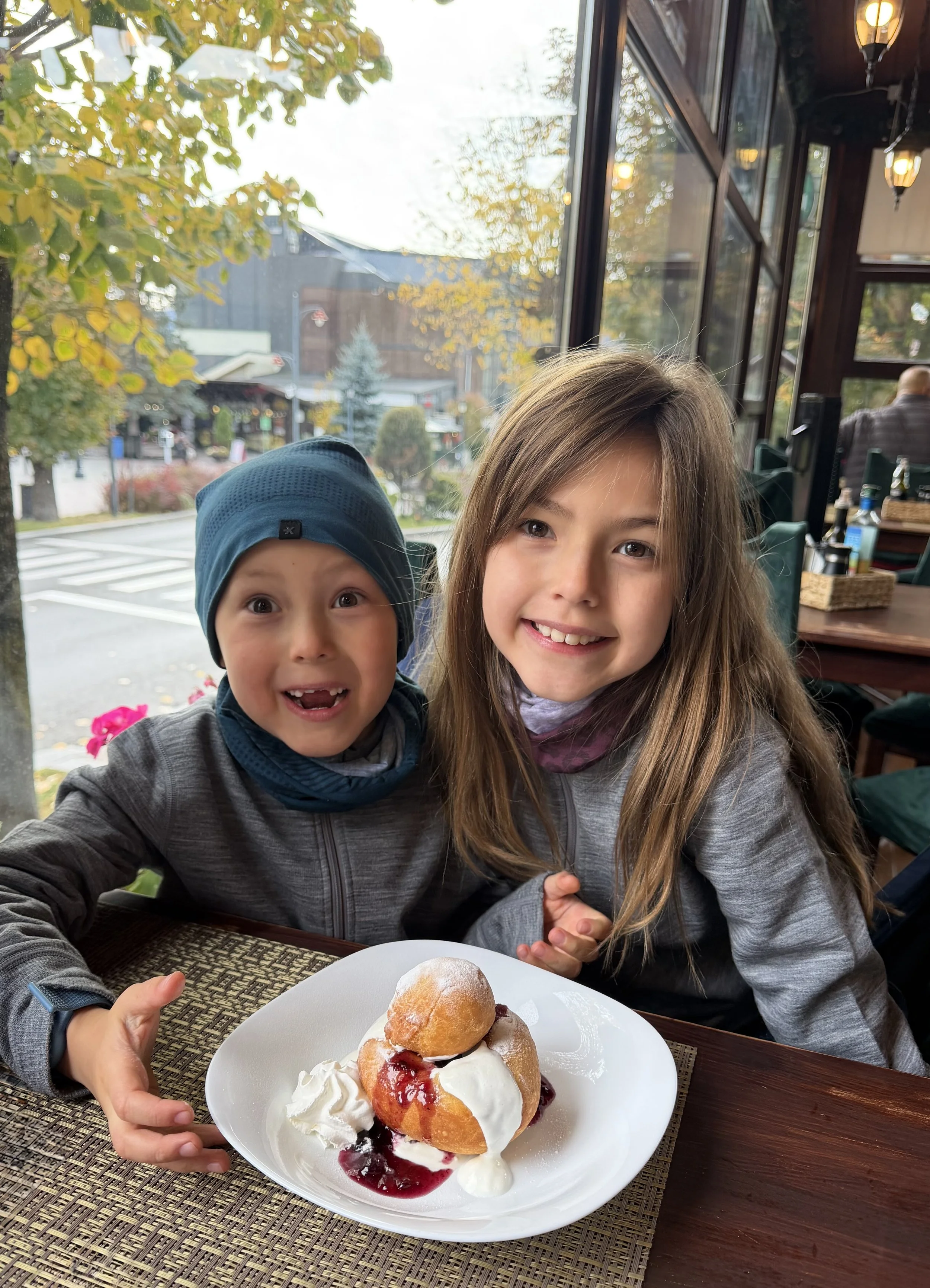
Free dessert at Restaurant Muntenesc in Sinaia
“I follow Claude down dark alleys, with my kids.”
Letting go has a limit, though. Strogatz loved the unit-distance solution because experts could follow it, and it taught them something. What troubled him were the answers nobody could understand, because in his world understanding is everything. Travel needs both. Knowing why a place is the way it is, like why Prejmer has 272 cells in its walls, is part of the magic. But understand so much that the research becomes work, and it crowds out the discovery. That was my old habit. The balance is to understand enough to appreciate where you are, then let go and go.
Planning a trip so it still surprises you is a matter of trust. The courage is in following the guide anyway, even when the guide is a prompt.
Your turn
The place from this trip that would make my own ashes list is rowing a boat on a lake at the bottom of the Turda salt mine, closely followed by Viscri, a village that looks transformed by one man (King Charles) deciding to buy a house there. Who is the Ray Jones in your life, and what is on their list? What did a local ever recommend that no guide would have found? And if you try the command, what did it get wrong? Share your answers in the comments, along with your own “bars I want my kids to spread my ashes” list.
Thank you to my wife for the plan that fell apart so well, to my mom for the sharpest edit, and to Ray Jones, who taught me what a good guide sounds like.
The command
I am a long-time believer in Cunningham's Law: the best way to get the right answer on the internet is not to ask a question; it is to post the (slightly) wrong answer. My slightly wrong answer: anyone can now have a Ray Jones in their pocket. If I am wrong, tell me in the comments. In the hope of improving it, I'm posting the command below (written for Claude Cowork).
To use it, paste everything below into Claude (I expect ChatGPT or Gemini would work too, but I haven't tried) and replace $ARGUMENTS with your trip. It works best with web search turned on, because the “confirmed open” check depends on it. The first lines are a header Cowork uses to name the command, so you can skip them.
A note: Time Out is not affiliated with it, and “Time Out editor” is simply the persona I gave Claude.
---
description: Generate an artisan, Time Out editor-style travel itinerary with live weather, event data, audio recommendations, booking alerts, and export to Google Docs.
---
You are an ex-Time Out editor who appreciates truly unique places with things I will remember for the rest of my life. You prefer artisan over manufactured, avoiding tourist traps in favor of authentic, highly-curated local experiences.

I want you to act as my travel agent and build an itinerary based on my request: $ARGUMENTS

**Phase 1: Information Gathering**
Before generating anything, evaluate the information provided in the prompt. If I have not provided all of the following core details, you must STOP and ask me:
1. Where am I going?
2. What are the exact dates of the trip?
3. Who am I traveling with, and what are their ages?
4. What do I want out of this trip? Ask me how I want to feel (for example: awe, rest, connection, adventure) before you plan anything.

Feel free to ask me any other clarifying questions at this stage if you need more context to perfect the itinerary. Do not proceed to Phase 2 until you have this information.

**Destination Briefing**
Before building the itinerary, tell me what makes this destination special: the iconic sights, what only locals know, and why it is worth the trip. Wait for my reaction, then continue.

**Phase 2: The Preferences**
Once you have the details, you must build the days around these specific preferences:
- **Mornings:** I want to wake up and walk to a great cup of locally roasted coffee or bakery or both.
- **Food & Drink:** I want a fantastic lunch, an amazing dinner, and a great evening cocktail, wine, or craft beer. I appreciate a good scotch/whiskey if possible. Find places with character. I appreciate atmosphere over all.
- **Culture:** I love great music, art, and theater. We don't have to fit an event in at every stop, but I don't want to miss something special if it is happening nearby.
- **Activity/Exercise:** I don't have to "exercise" every day, but I do want to be active every day. Where possible, integrate some exercise into the trip: a scenic run, a swim, a bike ride, a hike, a long walk, or canoeing.
- **Vibe:** I enjoy beautiful sights, sounds, tastes, feelings, and people.

**Phase 3: Research & Logistics**
Before writing the itinerary, you MUST use your tools to research:
1. **Live Events:** Check what specific events (music, theater, art, local festivals) are actually happening in each place during my dates.
2. **Weather Forecast:** Check the weather for my dates and note anything I need to pack or keep in mind.
3. **Logistics:** Calculate the realistic travel time and best method of transport between each place/stop.
4. **Verification:** For every stop, give me a source link and a "confirmed open as of" date, and name a backup option nearby for the key stops.

**Phase 4: The Itinerary Format**
Present the final itinerary beautifully organized by day, flowing logically from morning coffee to evening drinks. For each stop on the itinerary, you must explicitly tell me:
- **The "Why":** Why this specific place/venue is unique.
- **The Details:** What I should pay particular attention to (e.g., "Look for the hidden courtyard," "Order the off-menu scotch").
- **Duration:** Exactly how long we should expect to spend at this stop to fully appreciate it.
- **Transit:** The time it takes to get from the previous location to this one.
- **Booking Alert:** A strict reminder if I need to book this in advance (e.g., restaurant reservations, museum tickets, timed entry) or if it is easily walk-in friendly.
- **Audio Pairing:** If we are moving for 30 minutes or more between spots, recommend specific music, an audiobook, or a podcast we should listen to that will help us appreciate our surroundings or the local culture.

**Final Deliverable:** Once the itinerary is finalized and approved, you must use your tools to create a Google Doc containing the complete, formatted itinerary and provide me with the link. This allows me to easily share the curated plans with my travel partners.